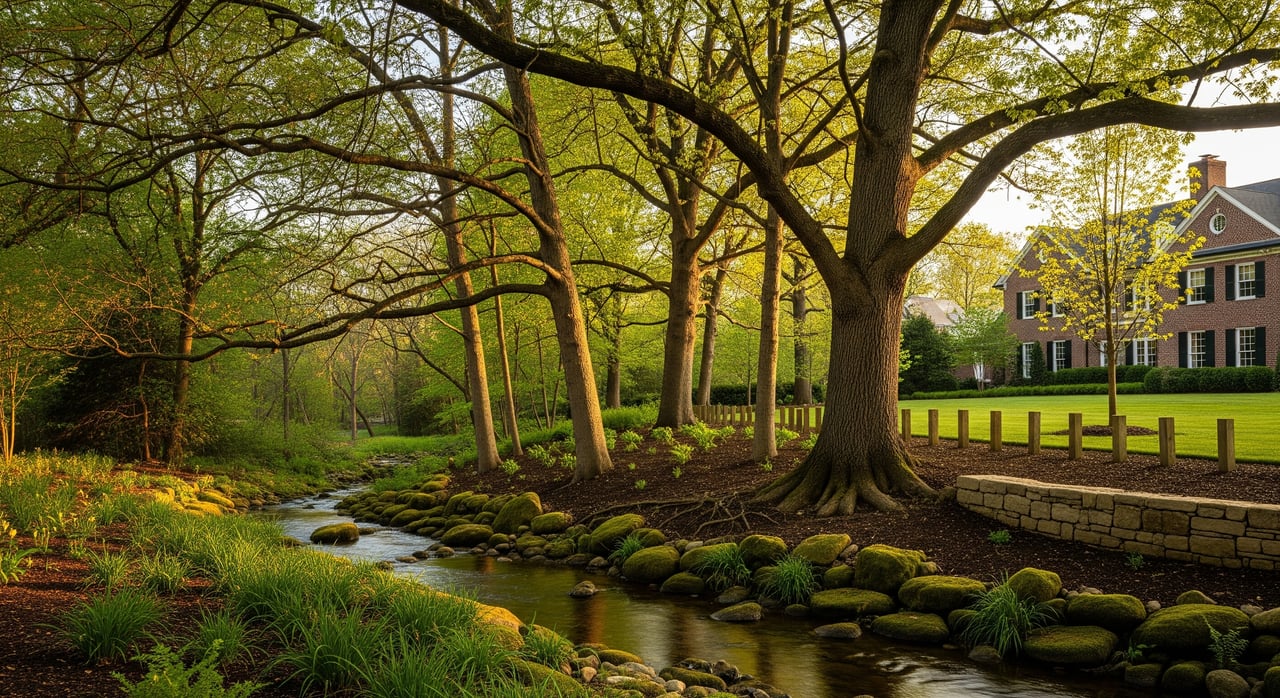
Do you have a tree leaning over your yard and are not sure if you can remove it? If your Fairfax home sits near a stream or wetland, you may be inside a Resource Protection Area, which changes the rules. You want to keep your family safe and protect your investment, and you also want to follow county requirements. In this guide, you will learn what an RPA is, when tree removal needs approval, how Fairfax’s waiver process works, and what changed with the latest mature tree protections. Let’s dive in.
What is an RPA in Fairfax?
A Resource Protection Area is land near water features that must stay natural to protect water quality. State regulations require a 100-foot buffer around tidal wetlands, tidal shores, perennial streams, and their adjacent wetlands. You will see this described in Virginia’s Chesapeake Bay regulations as part of the development criteria for localities. Fairfax County enforces these rules through its Chesapeake Bay Preservation Ordinance and maps RPAs on county GIS tools.
- Read the state definitions for the 100-foot buffer in the Virginia Administrative Code development criteria for RPAs.
- See Fairfax’s overview of RPA requirements in the Chesapeake Bay Preservation Ordinance.
Can you remove a tree in an RPA?
In general, you need county approval before removing vegetation in an RPA. Fairfax describes RPAs as areas that should remain in a natural, undisturbed condition, and most development, land disturbance, or vegetation removal is restricted without approval. Clear cutting or converting the area to lawn is not allowed.
What is allowed with approval
Fairfax can approve specific activities through an RPA waiver or other reviews. Examples include removing dead, dying, or diseased trees, removing invasive plants, limited pruning for sight lines or access, and shoreline erosion work with native replanting. Many of these approvals come with mitigation, such as replacement plantings of native species.
- Learn what vegetation removal can qualify for a waiver and how to apply on the county’s page for removing vegetation in an RPA.
Land-disturbing thresholds
If your project disturbs more than 2,500 square feet of soil, you may also need erosion and sediment control measures and separate permits. This threshold is in addition to RPA approvals and applies even outside RPAs.
- Review the county’s tree removal and land disturbance guidance on Public Works’ tree removal page.
How to check if your property is in an RPA
Start with Fairfax’s online Watersheds and RPA Viewer to see estimated RPA boundaries. Treat the map as guidance only. For precise lines, the county may require a site-specific delineation during review. If you have questions about your parcel, contact Land Development Services using the instructions on the county’s RPA pages.
- Get mapping guidance and FAQs on the county’s Resource Protection Areas FAQs.
The Fairfax permit pathways
There are two common paths, depending on your scope.
RPA Waiver via PLUS
For dead, dying, or invasive vegetation removal and limited vegetation management, you typically submit an RPA waiver in Fairfax’s online permitting system, PLUS. Homeowners can prepare their own application. The county may ask for photos, a simple site sketch or plat, and in some cases a letter from a certified arborist. For many vegetation-removal cases there is no fee, and a complete waiver is often reviewed in about 5 business days.
- See how to submit and what to include in a waiver on removing vegetation in an RPA.
Water Quality Impact Assessment (WQIA)
If your project goes beyond a waiver, you may need a Water Quality Impact Assessment. This is a more detailed review that can include mitigation or replacement plantings and, in some cases, an exception process. The county’s RPA FAQs outline when a WQIA is required.
- Explore when WQIAs apply in the county’s RPA FAQs.
Other permits you might need
If work triggers building or site permits or disturbs over 2,500 square feet, you will need erosion and sediment controls and potentially additional approvals. Coordinate the RPA review with any other permits so your plan is consistent.
- Check land-disturbing permit details on Public Works’ tree removal page.
2024 updates: stronger mature tree protections
Fairfax County adopted amendments to its Chesapeake Bay Preservation Ordinance that strengthen protections for mature trees and add coastal resilience considerations. These changes took effect on October 9, 2024 and apply to new plans and applications after that date. Expect a higher priority on preserving large canopy trees and more emphasis on replacement planting when removal is approved.
- Read the county’s notice on the amendments in the Letters to Industry bulletin.
- See the state’s development criteria that localities implement in the Chesapeake Bay regulations.
If a tree is hazardous
If a tree poses an immediate safety risk, do not assume you can cut right away. Fairfax offers expedited paths for hazardous trees, but you should document the hazard with photos and, if possible, an arborist letter, then contact Land Development Services to confirm the proper process before removal. This helps you avoid violations and speeds review.
- The county outlines documentation and submittal steps on removing vegetation in an RPA.
Selling a home with RPA constraints
If your property includes an RPA, plan ahead for disclosures. Buyers may ask for proof that recent tree work or vegetation removal in the RPA had county approval and that required mitigation was completed. Unresolved violations can lead to restoration orders or penalties, which can delay or complicate a sale. Check your parcel’s permit history and keep records of approvals and plantings.
- Review county background and enforcement context in the Chesapeake Bay Preservation Ordinance overview.
Your step-by-step plan
- Check the RPA map for your property using the county’s viewer in the RPA FAQs.
- Take clear photos of the tree, canopy, and site conditions. Note proximity to water.
- If the tree is dead, diseased, or hazardous, consider getting a letter from a certified arborist.
- Gather a simple site sketch or property plat that shows the tree location.
- Submit an RPA waiver through PLUS for eligible vegetation removal. Confirm if fees apply.
- Wait for written county approval before any cutting. Plan for required mitigation.
- Replant with native species as directed and keep receipts and photos for your records.
Mitigation and replanting
When the county allows removal, it often requires replacement plantings to restore the buffer’s function. Native species are preferred. The state regulations and local updates both stress planting and buffer restoration as part of approvals.
- See how state criteria guide planting and restoration in the Chesapeake Bay regulations.
Avoid penalties and common mistakes
Unauthorized clearing or tree removal in an RPA is a violation. The county can require a restoration plan and may impose fines or other enforcement actions. The most common missteps are cutting before approval, converting buffer areas to lawn, and skipping required replanting. Protect yourself by getting formal written approval and following the plan as approved.
A smarter path forward
Managing trees in an RPA is about safety, compliance, and long-term value. With a clear plan, proper documentation, and early coordination with Fairfax, you can address risk while protecting your property and the Chesapeake Bay. If you are planning to buy or sell in Fairfax and want to understand how RPAs affect value, disclosures, and timelines, connect with Stacie Hennig Davis for calm, data-driven guidance.
FAQs
What is a Resource Protection Area in Fairfax County?
- An RPA is land near certain water features that includes a 100-foot buffer intended to protect water quality, implemented locally through Fairfax’s Chesapeake Bay Preservation Ordinance.
Do I need approval to remove a dead tree in an RPA?
- Yes, most vegetation removal in an RPA requires county approval; dead, dying, or diseased trees can often be removed through an RPA waiver with documentation.
How long does an RPA waiver take in Fairfax?
- For complete vegetation-removal waiver submissions, Fairfax often reviews in about 5 business days, though complex cases may take longer.
What if I already removed vegetation in an RPA without approval?
- Unauthorized removal is a violation and may trigger restoration requirements or penalties, so contact the county to address the issue and avoid further enforcement.
How do RPAs affect selling my Fairfax home?
- You should disclose known RPA constraints and keep permits and mitigation records, since buyers may request proof that any tree work in the RPA was approved and completed correctly.
What documents might Fairfax request with an RPA waiver?
- Typical items include photos, a site sketch or plat, and sometimes a certified arborist letter to document tree condition and location.
Does the 2,500 square foot rule apply to tree work?
- Yes, if your project disturbs more than 2,500 square feet, you may need erosion and sediment controls and additional permits, separate from RPA approval.