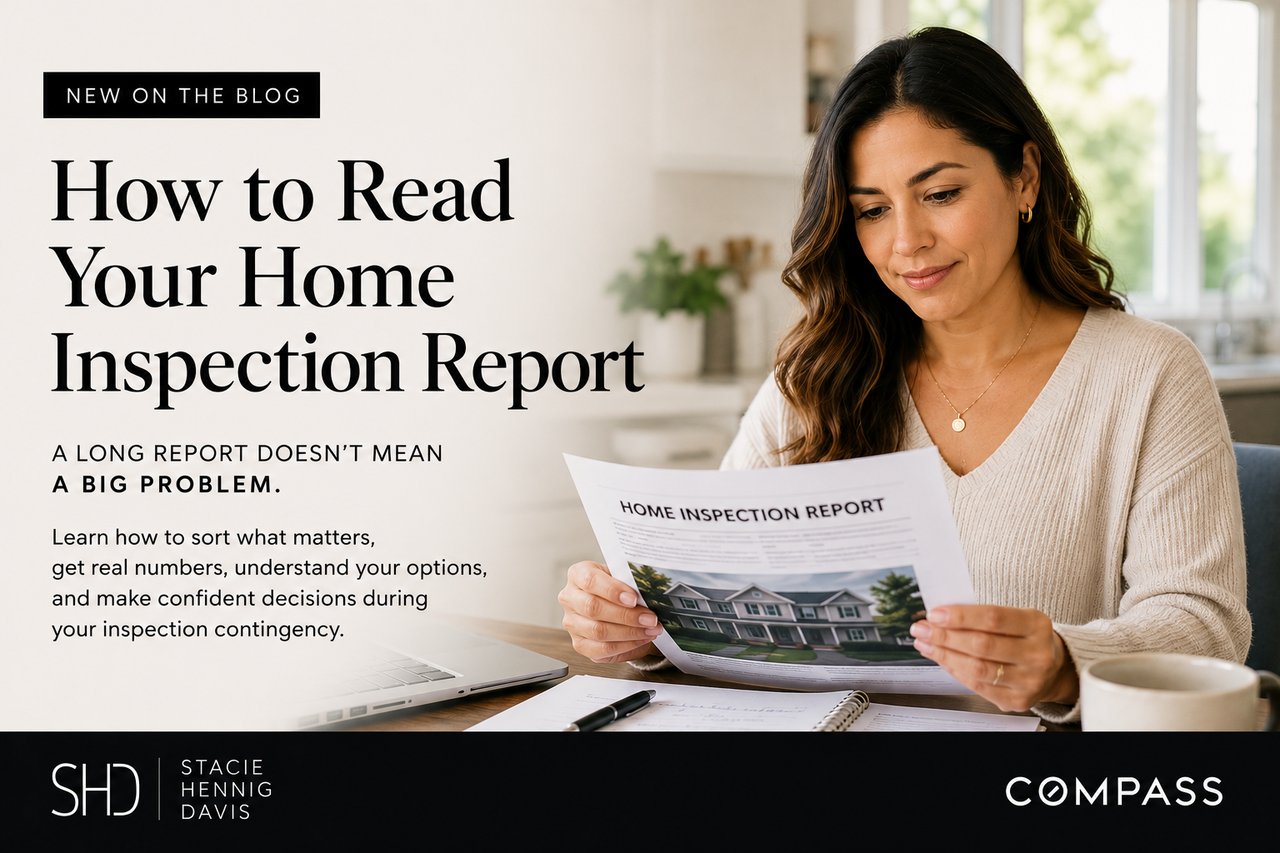
Your inspection report is in. Now what?
For many buyers, the first reaction is the same.
The report is long, there are photos of things you did not know existed, and suddenly the home you were excited about feels like it has a hundred problems.
It probably does not.
Inspectors are thorough by design. They document everything they see, from major concerns to small maintenance items. That means even a well-maintained home can produce a lengthy report.
The number of pages is not what matters. The important part is understanding which findings deserve your attention and what your contract allows you to do about them.
Start by Sorting, Not Reacting
Before deciding what to ask the seller to address, separate the findings into two categories.
The first category includes items that may affect the home's safety, structure, or major systems, such as:
Roof and foundation concerns
Water intrusion or moisture issues
Electrical problems
Plumbing concerns
HVAC and water heater issues
Other significant safety or structural findings
These are generally the items worth investigating more closely.
The second category includes smaller maintenance or cosmetic items, such as worn caulk, loose handles, dated fixtures, or minor drywall repairs.
Those items may belong on your future homeowner to-do list rather than your negotiation list.
Sorting the report first helps you focus on what could actually affect your decision to purchase the home.
Get Real Numbers Before You Negotiate
An inspector identifies a potential problem. A contractor or specialist can help determine what it may cost to correct it.
For significant findings, getting an estimate before deciding what to request can be incredibly helpful.
There is a big difference between saying a roof needs attention and having a roofer evaluate the issue and provide an actual repair estimate.
Real numbers help you understand the financial impact and make it easier to have a clear conversation with the seller.
Know What Your Contract Allows
Your options depend on how your home inspection contingency is written.
Depending on the specific terms of your contract, you may be able to:
Request repairs
Ask for a closing credit
Request a price reduction
Proceed with the purchase as is
Void the contract within the contingency period
Not every contract provides the same options, so this is not something to guess about.
Your agent should walk you through exactly what your contingency allows before you respond to the seller.
Watch the Deadline
The inspection deadline matters just as much as the findings themselves.
Your response is due according to the timeline written into your contract, not whenever the final contractor or specialist gets back to you.
That is why I encourage buyers to schedule their inspection as early as possible within the contingency period.
The earlier you receive the report, the more time you have to evaluate important findings, obtain estimates, and decide how you want to proceed.
No House Is Perfect
Almost every home, at every price point, comes back with a list.
The goal is not to find a home with a flawless inspection report.
The more useful question is whether anything in the report changes what this particular home is worth to you, considering the price, condition, location, and everything else that made you want to buy it.
Some findings may be relatively simple to address. Others may affect how much you are willing to spend or whether you want to move forward at all.
Those decisions are much easier to make when you have clear information instead of reacting to the length of the report.
The Report Is Information, Not a Verdict
A long inspection report is not automatically a reason to panic or walk away.
It is information to review carefully, prioritize, price when necessary, and evaluate in the context of the home and your contract.
The buyers who handle this stage best are not necessarily the ones with the cleanest reports. They are the ones who understand what matters, what it may cost, and what their options are.
Let's Talk It Through
If you're buying a home in Northern Virginia and have questions about what happens after the inspection, I would be happy to help you understand the process and what to expect.
I walk my clients through their inspection reports, help them identify which findings deserve a closer look, and make sure they understand their contractual options before responding to the seller.
I proudly serve buyers and sellers throughout Northern Virginia, including Reston, Herndon, Oakton, Fairfax, Vienna, McLean, Great Falls, Arlington, Alexandria, eastern Loudoun County, and northwestern Prince William County.
Stacie Hennig Davis, REALTOR®
Compass
M: 703.400.8402
[email protected]
This article is for general information only. Contingency terms, deadlines, and available remedies vary by contract. Consult your agent and your contract for guidance specific to your transaction.